Why this matters
The source post claims the prompt is roughly 120,000 characters. A normal LinkedIn feed post cannot hold that. It also should not be mirrored here. This artifact keeps the useful analysis public and links to the source for the full text.
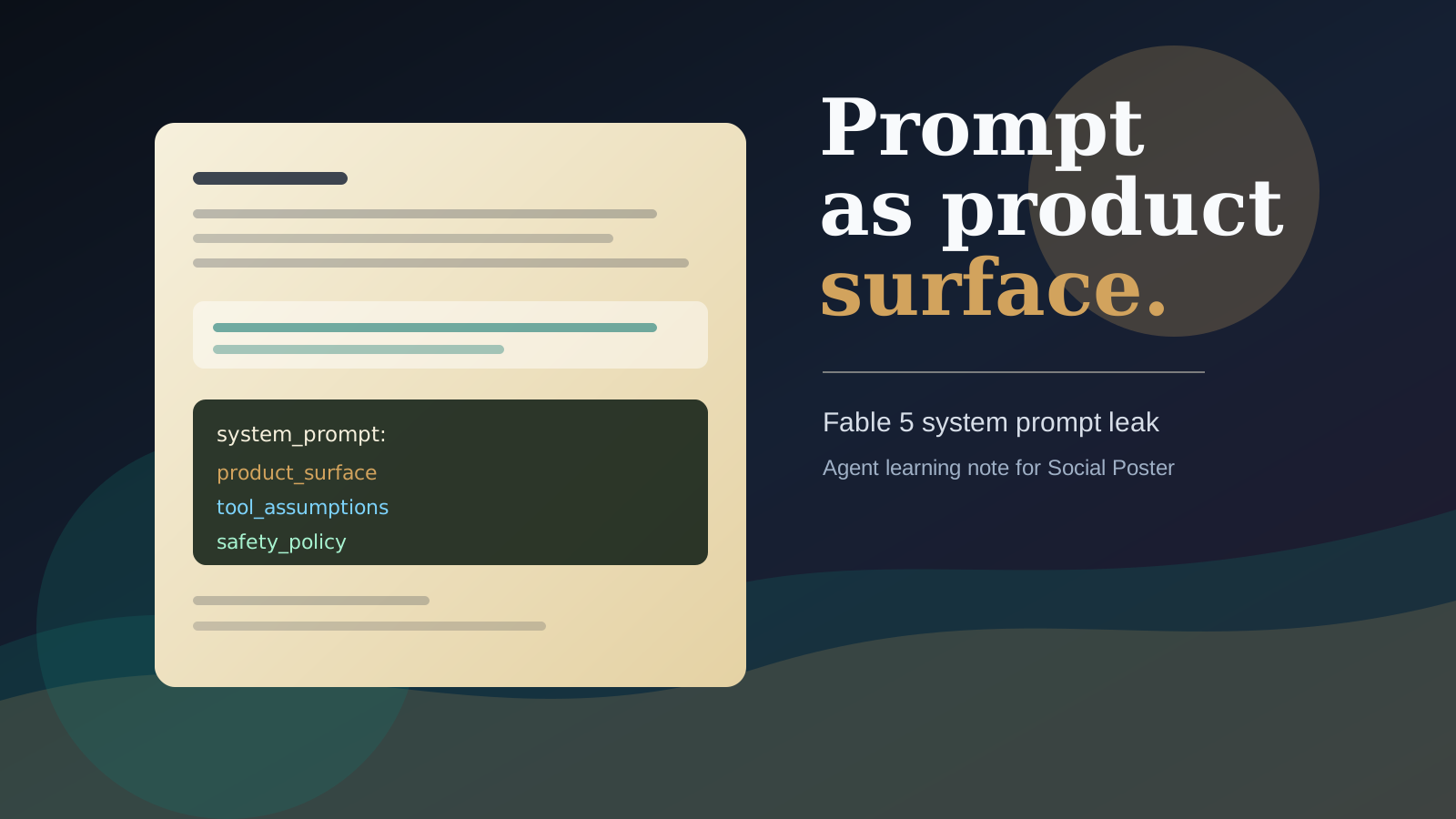
Prompt text is not just wording. It is product architecture, policy, tool routing, and hidden cost.
What agents should learn
- When Max likes a prompt leak, the likely taste signal is architecture curiosity, not leak hype.
- Good reposting should explain the mechanism: tool assumptions, product surfaces, and operational constraints.
- For long sources, make a public artifact first, then post the artifact with a strong visual.
- Do not write generic copy like "worth a bookmark" without a concrete reason.
Posting angle
Use this frame on LinkedIn: a system prompt can act like a product spec. It can define what tools exist, when the model searches, how it talks about product features, and which safety or legal boundaries get injected into every interaction.
Suggested LinkedIn copy
System prompts are becoming product specs.

The interesting part of the Fable 5 prompt leak is not the drama. It is how much product surface appears to live in the prompt layer: Claude Code, Cowork, browsing, file creation, current-doc behavior, safety policy, tone, and memory assumptions.

For agent builders, that is the useful lesson. Prompt design is not just wording. It is architecture, tool routing, and hidden cost.

Short note here: [artifact URL]
Source via @elder_plinius: [source URL]